 The Psychic Studio

A dragonfly visit is hard to ignore. The wings flash blue or copper, the body hovers and then darts, and for a few seconds your whole attention narrows to one small creature. It is no surprise that people across cultures have read meaning into the moment.
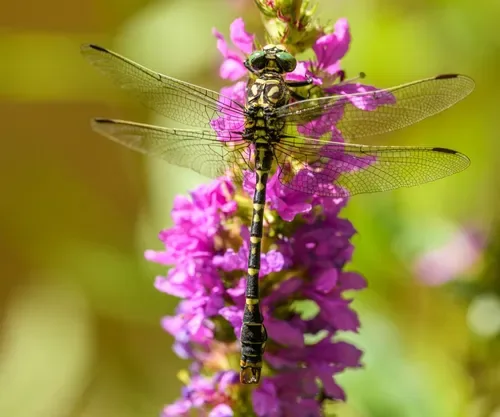
The honest starting point is the insect itself. Dragonflies are among the oldest flying animals on Earth, and they spend most of their lives underwater as nymphs before a few weeks or months in the air. A visiting adult is, quite literally, a creature at the far end of a long transformation.
What it means when a dragonfly visits you: the classic reading
In modern symbolic writing, a dragonfly visit is most often read as a sign of change already underway. Not change announced with trumpets, but the quiet kind: a shift in how you see a relationship, a job, a version of yourself you are outgrowing. The dragonfly spends years becoming something that can fly, then flies.
A second common thread is lightness. Dragonfly folklore in many traditions links the insect to joy, adaptability and not taking things too heavily. Read reflectively, a visit can be a nudge to hold your current problem a little more loosely, the way the dragonfly holds the air.
A third thread is presence. A dragonfly does not visit for long. The meaning, if you want one, is partly in the noticing: you stopped, you looked, you were exactly where you were.
When the visit keeps happening
One visit is a moment. Repeated visits start to feel personal, and people usually ask the question then. The reflective approach is to ask what was on your mind each time. If the same worry or hope was sitting in the front of your mind on three different afternoons, that is the material to work with, more than the insect itself.
There is also a plain explanation worth keeping nearby: dragonflies follow water, warmth and prey. If you are seeing them often, you may simply be spending time in places that are good for dragonflies, which usually means gardens, ponds and slow evenings. That is not a small thing either.
Dragonfly visits and change you did not choose
Sometimes the question arrives during a hard season: a move, a loss, a relationship ending. In that frame, the dragonfly's long underwater becoming reads differently. It suggests that transformation does not always look like progress from inside it. The nymph does not know about the wings.
A gentle way to use the symbol here is as permission to be mid-change without demanding clarity yet. You do not have to know what the wings will be for.

A tarot reflection
If you read tarot, the dragonfly's shape-shifting life maps onto Death, the card of endings that turn out to be transformations, while its lightness in the air belongs to The Fool, the card of beginning again with trust. For the discipline of adapting mid-flight, the Eight of Wands is the card of things finally moving fast after long stillness. A one-card pull asking "what is already transforming in me" pairs naturally with a dragonfly week.
You can browse all the cards in our tarot card meanings library, or read our companion notes on yellow butterfly spiritual meaning and mourning dove spiritual meaning, which work with similar visitor symbolism.
Questions about dragonfly visits
**Is a dragonfly visiting you a good omen?** Most traditions treat it positively, as a sign of change, adaptability or joy. We would frame it as a good prompt rather than a good omen: a reason to notice what is shifting, not a promise about outcomes.
**Does a dragonfly visit mean a loved one is near?** Some people experience dragonfly visits as connected to someone they have lost, the way others read cardinals or butterflies. If that reading brings comfort, there is no harm in keeping it, held gently as meaning rather than proof.
**What should I do after a dragonfly visits?** Nothing is required. If you want a small practice, write down what you were thinking about in the moment before you noticed it, and look at that thought with fresh eyes.
Sources and photo credits
Background reading: Mental Floss on dragonfly folklore and spiritual meaning. Symbolic meanings vary between traditions; this post is a reflective take, not a definitive reading.
Photos from Pexels: Photo 1, Photo 2, Photo 3. Used under the Pexels License. Stock models do not endorse this site.